



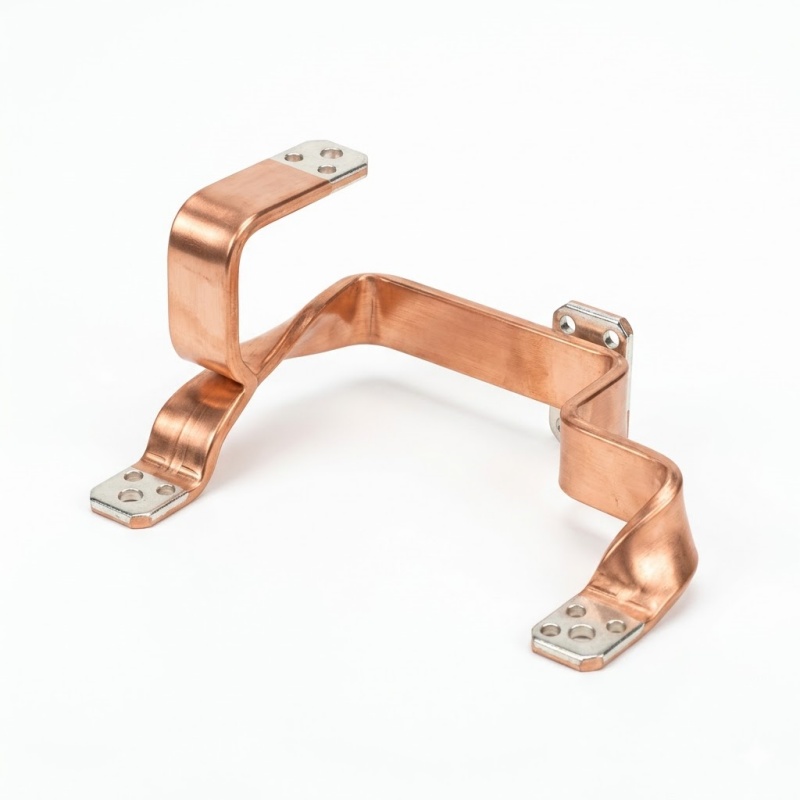
As North America and Europe successfully complete the first public MCS sessions in March 2026, the industry is demanding interconnects capable of handling over 1,500 Amps. SINNHONG’s latest High-Current Busbar Modules are designed for these extreme energy transfers, ensuring that Class 8 electric trucks and logistics vans can achieve 20% to 80% charge in under 30 minutes. By adhering to the IPC-A-620 Class 3 Standard, SINNHONG’s busbars provide the safety margins required for 1500V DC peak operations.
The 2026 shift toward Cell-to-Body (CTB) and Cell-to-Chassis (CTC) integration has redefined vehicle architecture. SINNHONG’s Robotic-Assembly Compatible busbars feature Press-Fit terminals and standardized alignment points, allowing Tier 1 OEMs to automate battery tray assembly with humanoid robots and high-speed SMT lines.
"Our 2026 'Plug-and-Power' modular trays are built for the flat-floor requirements of Skateboard Chassis," said the Head of OEM Electronics Manufacturing at SINNHONG. "We are moving beyond simple components to provide full Subframe-Integrated Power Rails that act as both electrical and structural elements."
In light of the March 2026 Section 301 Tariff updates, SINNHONG’s dual-manufacturing strategy has become a vital asset for global partners. By producing UL Listed Wire harnesses and Laminated Busbars in its Vietnam facility, SINNHONG enables US and EU clients to secure a tariff-exempt supply chain. This "Vietnam-Origin" advantage, combined with Landed-Cost Optimization, allows EV startups to maintain aggressive pricing in a highly competitive market.
Aligning with 2026 ESG (Environmental, Social, and Governance) mandates, SINNHONG has introduced Low-Carbon Footprint Copper and recycled polymer insulation across its product range. As the industry moves toward a circular value chain, SINNHONG’s Sustainable EV Interconnects provide the transparency and traceability required by the latest European and North American battery regulations.
 sales@sinnhong.com
 Whatsapp: 8613543700314
 Send us message
